

With his closest NATO allies abandoning him and refusing to participate in a war that—as they say—is not theirs, US President Donald Trump is sinking day by day deeper into the deadlock that he, along with Israel, set up in the wider Middle East. With American generals urging him to end the war in Iran as soon as possible, Trump seems to be seeking an alibi for the fiasco in the Gulf. According to him, if he had not approved the attack on Iran, then we would be facing a nuclear war that would evolve into World War III. However, the situation is completely out of control. With oil prices steadily hovering at $100 per barrel and Iran in full control of the Strait of Hormuz, Trump is now reportedly facing pressure from his Gulf allies not to prematurely end military operations and leave them exposed to Tehran's wrath. Indeed, Iran continues to target Gulf states daily, while launching another heavy attack with missiles and drones against the US embassy in Baghdad, Iraq, as well as a series of strategic targets in Israel. For its part, the IDF, the Israeli army, bombards Tehran and Beirut daily, while the ground invasion in southern Lebanon is in full swing.
Thriller over the fate of Iranian strongman Ali Larijani
An incredible thriller has broken out regarding the fate of top Iranian official Ali Larijani. Israel targeted the high-ranking Iranian official in an airstrike in Iran overnight, according to Israeli officials. It is unclear if Larijani, Secretary of Iran's National Security Council, was killed or injured in the raid. The Tasnim agency reported that Ali Larijani sent a text message to his Telegram channel on March 17 expressing his grief over the death of Iranian sailors. In this way, Iran wants to send the message that the Secretary of the National Security Council is alive. However, Israeli Defense Minister Israel Katz claimed that Larijani was killed. "Larijani and the Basij commander were eliminated overnight and joined Khamenei, and all the eliminated members of the axis of evil, in the depths of hell," Katz stated. "The Prime Minister and I have instructed the IDF to continue the hunt for the leadership of the regime of terror and oppression in Iran," the Israeli Defense Minister emphasized.
IDF: Basij commander dead
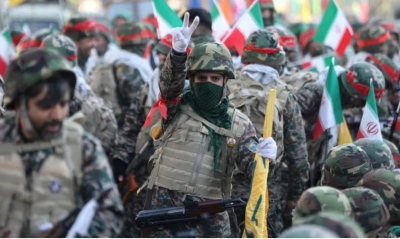
However, the IDF claims it neutralized the commander of the Basij paramilitary forces, Gholamreza Soleimani, in a raid in Iran overnight. Soleimani was targeted while in a camp with tents recently set up by the Basij. According to the IDF, the Basij established the camp after the Israeli military had struck many of the paramilitary force's headquarters. Furthermore, the Israelis claim that the deputy commander of the Basij and other high-ranking members of the paramilitary force were killed during the raid.
At the same time, another recent Israeli airstrike in Iran targeted the leader of Palestinian Islamic Jihad, Akram al-Ajouri, and other top officials of the organization, according to Defense Ministry sources. The IDF Chief of General Staff, Lieutenant General Eyal Zamir, appears to confirm the details. During a morning assessment, Zamir stated that "significant elimination achievements were also recorded overnight, with the potential to affect the campaign's achievements and the IDF's missions." He added that "senior handlers involved in terrorist activity from Gaza and from Judea and Samaria (West Bank)" were hiding in a safe house in Tehran when they were struck, referring to the Islamic Jihad officials.
Violent Iranian attack on the US embassy in Iraq
A heavy attack with at least 5 drones and missiles was launched earlier today at dawn by Iran against the US embassy in Baghdad, Iraq. According to Iraqi security sources, this attack was the most intense since the start of the US-Israel war against Iran.
Rockets and at least five drones were launched at the US embassy in Baghdad from areas around the city, Iraqi security sources said, describing the attack as the most intense since the start of the US-Israel war with Iran https://t.co/eZworvK0io pic.twitter.com/pm6wn5XcE1
— Reuters (@Reuters) March 17, 2026
Rockets and at least five drones were launched at the US embassy in Baghdad from areas around the city, Iraqi security sources said, describing the attack as the most intense since the start of the US-Israel war with Iran. Information indicates that at least 3 drones were headed toward the embassy. The C-RAM air defense system shot down two of them, while a third struck the interior of the embassy complex, from where fire and smoke could be seen.
WATCH: Explosion as US Embassy in Baghdad, Iraq hit by drone https://t.co/yXSevv5ell pic.twitter.com/Ixb8tEeDfM
— Rapid Report (@RapidReport2025) March 17, 2026
The US embassy in Baghdad protects its facilities from incoming projectiles using a 20mm Gatling machine gun that can fire 4,500 rounds per minute. According to a report by the Missile Defense Advocacy Alliance (MDAA), the Gatling is combined with radar, sensors, and communication units and is mounted on a 35-ton trailer, offering mobility and the ability to quickly locate and destroy incoming targets. The 20mm bullets have flexible use against light armor and explosive targets at a range of 2,000 meters, while possessing a self-destruct mechanism if the target is missed, so as not to cause unintended damage, according to the manufacturer General Dynamics. The system is a derivative of the naval Phalanx Close-in Weapons System, considered the last line of defense for warships against incoming missiles or surface targets that bypass long-range defenses.
Video clips circulated on Iraqi platforms on Monday evening showed an aerial target being intercepted near the US Embassy in Baghdad’s Green Zone, in the latest such incident since the US-Israel war on Iran began.
— Al Jazeera Breaking News (@AJENews) March 16, 2026
The embassy compound was also attacked on March 14. pic.twitter.com/dKOUfnGczb
New incident with American refueling aircraft
An American refueling aircraft faced another incident in Iraqi airspace and made an emergency landing in Tel Aviv. According to the Tasnim news agency, Iraqi sources announced that an American refueling aircraft encountered a new incident in Iraqi airspace and proceeded to an emergency landing in Tel Aviv, while an emergency state had already been declared at "Ben-Gurion" airport.
SNN: Iranian missiles fell near Netanyahu's office
Iranian missiles fell just meters away from the office of Israeli Prime Minister Benjamin Netanyahu in Jerusalem, as reported by the Iranian television channel SNN. "Today, Iran's missiles hit positions in occupied Jerusalem, just a few meters from the office of the Zionist regime's Prime Minister Netanyahu," the report states. As journalists note, some Israeli media reported that only one Iranian missile was intercepted, while the rest, penetrating the air defense system, reached their targets. On the previous day, it was reported that fragments from an intercepted Israeli missile fell on the roof of the Greek Orthodox Patriarchate building in Jerusalem, just a few meters from the Church of the Holy Sepulchre.
New York Times: USS Gerald Ford was on fire for 30 hours
At a time when information is increasing about Iranian drone attacks against US aircraft carriers, USS Abraham Lincoln and USS Gerald Ford, which resulted in forcing them to withdraw to safer positions away from the range of Iranian missiles, the New York Times reveals that a large fire on the American aircraft carrier USS Gerald R. Ford lasted over 30 hours and caused problems for hundreds of crew members. According to the report, the fire started in the ship's laundry areas and took more than 30 hours to be brought under control. More than 600 sailors lost their beds due to the fire and are forced to sleep on tables or the floor. Dozens of crew members inhaled smoke, while two sailors were slightly injured (without life-threatening danger), according to an official Navy statement. A large part of the ship remained without functional laundries, and generally difficult conditions are reported for the crew of approximately 4,500 people. The USS Gerald R. Ford, the largest American aircraft carrier, was deployed in the Red Sea as part of US operations in the area when the incident occurred. Initial Navy announcements characterized the fire as "non-combat related" and stated it did not affect the ship's operational capabilities. If the ship's current trip continues until mid-April, it will be the longest deployment of an American aircraft carrier since the Vietnam War.
Iran: "They burned it themselves to avoid fighting"
However, in Iran, they claim that American soldiers set fire to the aircraft carrier USS Gerald R. Ford themselves so they wouldn't have to fight. This version of the fire on the US ship was expressed by a representative of the Iranian military's central staff, Khatam al-Anbiya. "The American aircraft carrier (...) was deliberately set on fire in the Red Sea by American soldiers, due to the fear of the ship's crew," stated the representative of the Iranian Armed Forces' central staff. According to the Iranian military staff's version, the incident happened while the ship was heading toward the Gulf of Oman. It is supposed that the aircraft carrier was moved from the Mediterranean Sea to reinforce US positions in the region.
Two US aircraft carriers hastily withdraw to "safe positions"
Information from Russian media reports that the American aircraft carriers USS Ford and USS Lincoln are hastily withdrawing from the Persian Gulf amid multiple strikes by the Iranian military on the US Navy's two most valuable assets, forcing the Pentagon to move them toward Oman and Saudi Arabia, at a distance greater than 1,100 kilometers from Iran, whereas they were previously at 350 kilometers. Based on this information, the aircraft carrier Abraham Lincoln hastily left the Iranian coast and is now sailing near Salalah, Oman, covered behind coastal mountain ranges. Chinese satellite images confirm that the ship is at a distance greater than 1,100 kilometers from Iran. Meanwhile, the nuclear-powered USS Gerald R. Ford also moved away, finding refuge off Saudi Arabia near Jeddah, out of range of Iranian missiles.
Iran sweeps through
The 57th wave of Operation Wa’d-e Sadeq 4 was announced by the Revolutionary Guards (IRGC). According to the IRGC announcement, targets in the heart of Israel—including command, control, and communications infrastructure, as well as missile defense systems—were hit with precise Khaybar-shekan (Khaybar buster) missiles, as well as Emad and Qadr missiles. The Revolutionary Guards also reported the launch of the Zolfaqar, a medium-range precision missile that can use both solid and liquid fuel, and Qiam missiles, while also using smart autonomous drones (suicide drones) targeting the Al-Udeid Base, where American forces were stationed. As they state, these Iranian revenge attacks followed a large-scale, unjustified military campaign by the United States and the Israeli regime against Iran, which began after the assassination of the Leader of the Islamic Revolution, Ayatollah Seyed Ali Khamenei, along with several senior military commanders and civilians on February 28.
Qalibaf (Iran): The crisis in the Strait of Hormuz is not ending - We have changed our strategy
A clear message that the crisis in the Strait of Hormuz is not ending was sent by Iranian Parliament Speaker Mohammad Baqer Qalibaf, who claimed that US bombs and planes cannot destroy Iran's military facilities. In an extensive television interview, Qalibaf stressed that the waterway, vital for the global oil supply, remains under threat due to the "US and Israel presence" in the Gulf region. "The Strait of Hormuz cannot be as before and return to previous conditions," he said, adding that "there is no longer any security." Iran's military facilities have come under heavy attack from the US and Israel since the start of the war, but Qalibaf stated that Iran has learned from last year's 12-day war and has changed its launcher systems and design. "They think they can destroy our facilities with bombers, but they don't know that our design has completely changed," Qalibaf said. He reiterated that Iran will never surrender or bow to violence. When the war ends, he said that "the face and order of the Middle East will change, but nothing that America wants will happen," adding that the Islamic countries in the region will establish their own "local security." According to Qalibaf, the "only goal" the US and Israel achieved was the elimination of former Supreme Leader Ali Khamenei. "But the system was not overthrown and the young Khamenei came to replace him."
Tankers and oil wells targeted
At the same time, chaos prevails in the wider Gulf region. A tanker was hit by an "unknown projectile while anchored" late Monday 3/16 near the important UAE oil port in Fujairah, the UK Maritime Trade Operations (UKMTO) center reported early Tuesday. The ship was hit in the Gulf of Oman, 23 nautical miles east of Fujairah, and sustained minor structural damage. No crew injuries or environmental damage were reported, and structural damage is considered limited. Fujairah is a vital oil export route that bypasses the Strait of Hormuz, which has been essentially closed since the war with Iran began. The Fujairah oil terminal port and the neighboring Fujairah Oil Industry Zone (FOIZ) have repeatedly been targeted by Iran. Specifically, Fujairah city authorities reported that a fire broke out in the FOIZ as a result of a drone attack. "Civil Defense teams of the Emirate immediately took action to deal with the incident and are continuing their efforts to bring it under control," the Fujairah government press office in the UAE stated on Tuesday.
Hell in the Gulf
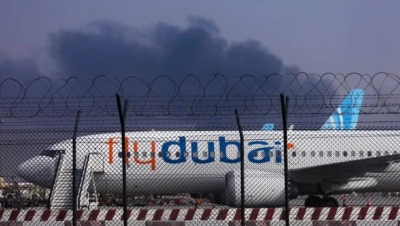
Explosions were also reported again in Dubai and Doha, Qatar. The UAE Ministry of Defense reported that a missile was intercepted, while in the Baniyas area of Abu Dhabi, a Pakistani national was killed by falling debris from an intercepted ballistic missile. The UAE came under attack, with reports of drone strikes causing fires at the huge Shah gas field outside Abu Dhabi. In Dubai, the explosion followed a notification sent to residents' mobiles to seek shelter "immediately" due to the "threat" of "missile" strikes. It is noted that yesterday, Monday 3/16, flights at Dubai International Airport were temporarily suspended after a drone hit a fuel tank, causing a large fire. Large flames rose near the airport before the fire was eventually brought under control. No injuries were reported. Explosions were also reported in Doha, Qatar. The Qatar Foreign Ministry reported that a fire broke out in an industrial zone due to falling fragments after a missile interception, adding that no injuries have been reported.
Gulf states to US: Don't you dare leave
The Arab Gulf states did not ask the United States to go to war with Iran, but many are now urging them not to stop prematurely and leave Iran still in a position to threaten the Gulf's vital energy line and the economies that depend on it. As Reuters reports, sources and Western and Arab diplomats say Washington is pushing Gulf states to join the US-Israel war. According to three of them, Trump wants to show that he has regional support for the campaign to boost its international legitimacy as well as domestic support. "There is a broad feeling throughout the Gulf that Iran has crossed every red line with every Gulf country," says Abdulaziz Sager, chairman of the Saudi-based Gulf Research Center. "In the beginning, we defended them and were against the war," he says. "But once they started directing attacks against us, they became the enemy. There is no other way to characterize them." The attacks have heightened Gulf countries' fears that leaving Iran with any significant offensive weaponry or weapon production capability could encourage it to hold the region's energy line hostage whenever tensions rise. As the war enters its third week, with US and Israeli airstrikes intensifying and Iran striking US bases and civilian targets across the Gulf, a Gulf source states that the prevailing mood among leaders was clear: that Trump should comprehensively weaken Iran's military capability. The alternative, according to the source, is living under constant threat. If Iran is not seriously weakened, he says, it will continue to hold the region "hostage."
Trump: We would have had nuclear war leading to World War III if we didn't hit Iran
In statements, US President Donald Trump claimed, in an attempt to justify the fiasco the US is experiencing in Iran, that if he had not ordered the attack, then we would have had nuclear war. The American president also claimed that Iran was ready to attack its neighboring states. "If I hadn't destroyed, as I say, their nuclear potential to... dust, — in one month after the attacks they would have already had nuclear weapons. And they would have used them — first against Israel and then in the entire Middle East. If we didn't do it, a nuclear war would have started, which would have evolved into World War III. And most importantly — it would be a war from which nothing would be left," Trump characteristically stated.
New Vietnam for the US if they send troops
The US will face a new Vietnam if they send troops to the war, argued Iranian Deputy Foreign Minister Saeed Khatibzadeh. Khatibzadeh said Iran is willing to fight for as long as it takes and that the country is not currently focused on a diplomatic solution, although he did not rule out negotiations, stressing that it is up to the US and its allies to submit a proposal that will end the conflict once and for all. Asked about the possibility of sending American troops on the ground, his message to Trump was clear: "Just read what happened in Vietnam." As he said, American soldiers could face a similar fate in Iran: "They understand that those who dragged them into this war can also drag them into a quagmire."
Douglas McGregor (US Colonel): Let’s face it, the US is on the brink of disaster in Iran
Former Pentagon advisor Colonel Douglas McGregor pointed out that the United States is on the brink of disaster due to the ongoing operation in Iran. He said this applies to both military and economic aspects. In fact, he warned that the US only stands to lose from this operation.
Iran: We deny secret contacts with the US to end the conflict
Iranian Foreign Minister Abbas Araghchi dismisses as a false claim the reports of repeated contact with the American side. The Iranian Foreign Minister, Abbas Araghchi, wrote in a message on the X network, rejecting as false the claim of repeated contacts with the US president's special representative: "My last contact with Mr. Witkoff was before his employer decided to abolish diplomacy and launch another illegal military attack on Iran," Abbas Araghchi stressed. Any other claim to the contrary appears to be solely for the purpose of misleading oil buyers and international public opinion.
IDF: Invading deeper into southern Lebanon
IDF forces state that they have pushed even more units deeper into southern Lebanon, as part of an expanded security zone established after Hezbollah attacks against Israel earlier this month. The 36th Division, which began a raid into southern Lebanon last week, has in recent days started a new "targeted ground operation toward an additional objective," according to the military. Before the forces moved into the area, the IDF carried out massive airstrikes and artillery bombardment. The IDF reports that the ground operation aims to expand the "forward defense area." In addition to the 36th Division's raid, the IDF announced yesterday that the 91st "Galilee" Regional Division is also conducting a "targeted ground operation" in the eastern part of southern Lebanon. Meanwhile, the 146th Reserve Division remains deployed defensively in the western part of southern Lebanon. The IDF is preparing to deploy even more forces to southern Lebanon and further widen the security zone to remove the Hezbollah threat from the border.
www.bankingnews.gr








Σχόλια αναγνωστών